
Description
What is Karsaka?
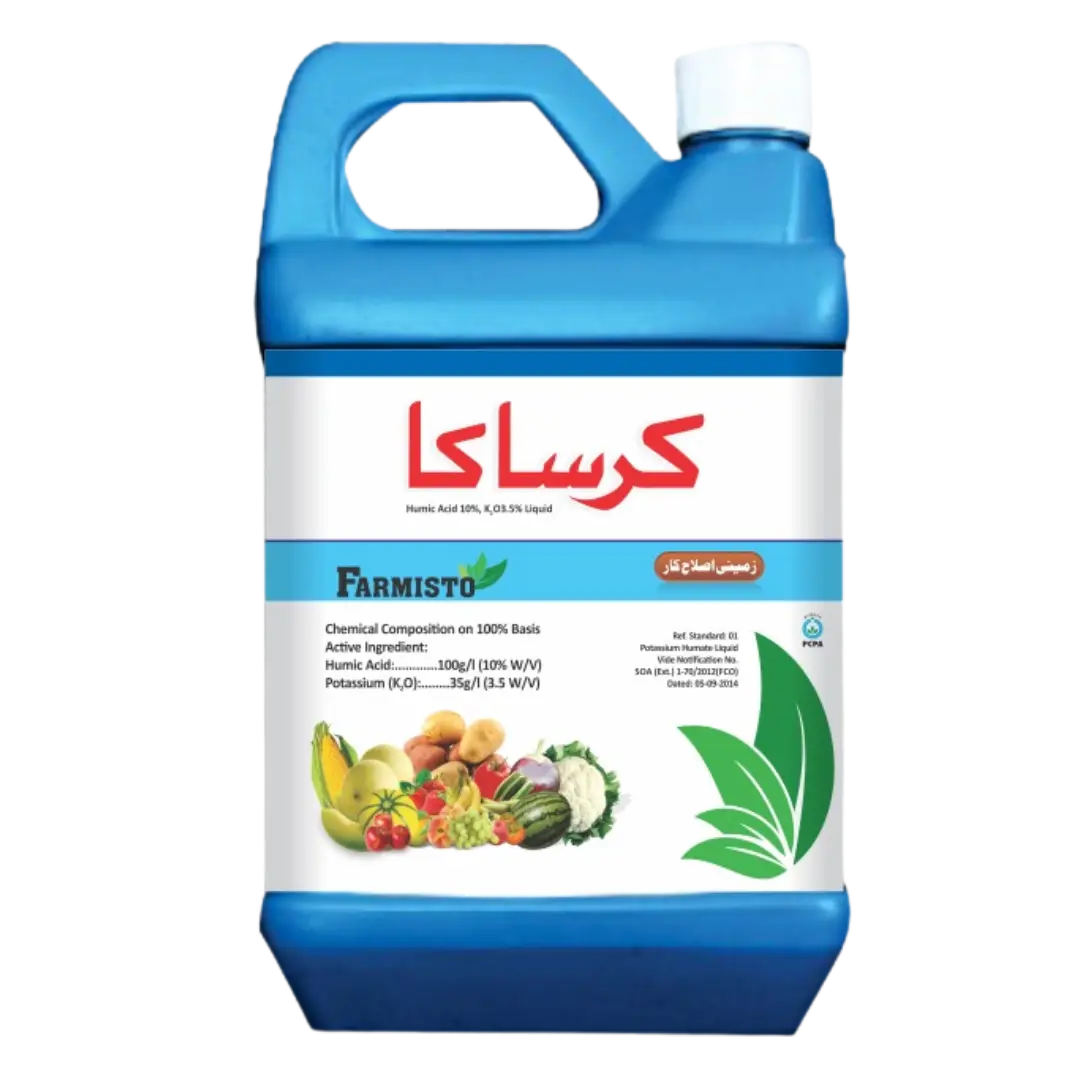
Karsaka is a liquid formulation containing 10% Humic Acid and 3.5% Potassium. It is specially designed to improve soil health and provide essential potassium for better crop growth. It plays a key role in enhancing soil structure, boosting microbial activity, and improving root development. With its balanced nutrients, Karsaka ensures that crops have access to the nutrients they need to thrive, even in compacted or degraded soils.
Key Benefits
Karsaka offers numerous benefits for both soil health and crop performance.
How It Works
Karsaka works by enhancing the soil’s ability to retain water and nutrients. The humic acid helps in improving the structure of the soil, which increases aeration and water retention. It also chelates nutrients, making minerals more available to plants. Potassium plays a crucial role in regulating water movement, activating enzymes, and enhancing the quality of fruits and crops. It helps crops withstand environmental stresses like drought and salinity by improving their stress tolerance.
Target Pests and Diseases
Karsaka is not designed to target specific pests or diseases. However, it is primarily focused on improving soil health and enhancing the overall growth environment for crops.
Other Crops & Diseases
✔ 1. Rice
Diseases Controlled: Root rot, Leaf spot
Benefits / Usage / Why Effective / Ideal Conditions:
- Humic acid improves root development
- Increases potassium content for better water regulation
- Ideal for sandy and clay soils
✔ 2. Tomatoes
Diseases Controlled: Wilt, Blight
Benefits / Usage / Why Effective / Ideal Conditions:
- Enhances nutrient availability for optimal growth
- Improves root structure for better uptake
- Suitable for tomato fields with compacted soil
✔ 3. Wheat
Diseases Controlled: Fusarium head blight, Powdery mildew
Benefits / Usage / Why Effective / Ideal Conditions:
- Strengthens plant structure to resist disease
- Reduces the need for additional fertilizers
- Best for wheat growing in arid or dry regions
✔ 4. Cotton
Diseases Controlled: Root rot, Cotton wilt
Benefits / Usage / Why Effective / Ideal Conditions:
- Enhances water retention and nutrient availability
- Improves resistance to drought
- Ideal for cotton fields in areas with irregular rainfall
Recommended Use
Apply 4-8 liters per acre, either pre-planting or during growth stages.
For optimal results, use Karsaka in degraded or compacted soils.
Safety and Precautions
- Always wear gloves and protective clothing when handling Karsaka.
- Avoid direct contact with skin or eyes.
- Ensure proper disposal of containers after use.
- Keep away from children and pets.
Local Advice for Pakistani Farmers
Balochistan: Karsaka is ideal for the arid conditions of Balochistan, where soil compaction is common. The product enhances soil water retention, which is essential in dry climates.
Khyber Pakhtunkhwa (KPK): In KPK’s mountainous terrain, Karsaka helps with improving soil aeration and root development for crops grown in hilly regions.
Punjab & Sindh: The intense cropping seasons in Punjab and Sindh can stress the soil, but Karsaka ensures that crops have the nutrients they need to withstand droughts and high temperatures.
FAQs:
How does Karsaka improve soil structure?
Karsaka enhances soil aeration and water retention by breaking up compacted soils. Its humic acid content helps in creating a better environment for plant roots to grow.
Can Karsaka help with drought resistance?
Yes, Karsaka’s potassium content helps crops withstand drought conditions by improving water regulation and root development, making crops more resilient.
What is the best time to apply Karsaka?
For best results, apply Karsaka either before planting or during the growth stages of crops. Follow the recommended dosage of 4-8 liters per acre.
Nadeem Ahmed –
I applied Karsaka on my degraded soil to improve overall soil health, and the results were impressive. The humic acid and potassium formulation enhanced soil structure, boosted nutrient availability, and supported stronger crop growth. Application was easy with the available pack sizes, and my crops responded well throughout the season. Karsaka is a reliable solution for farmers looking to improve soil fertility and crop performance.